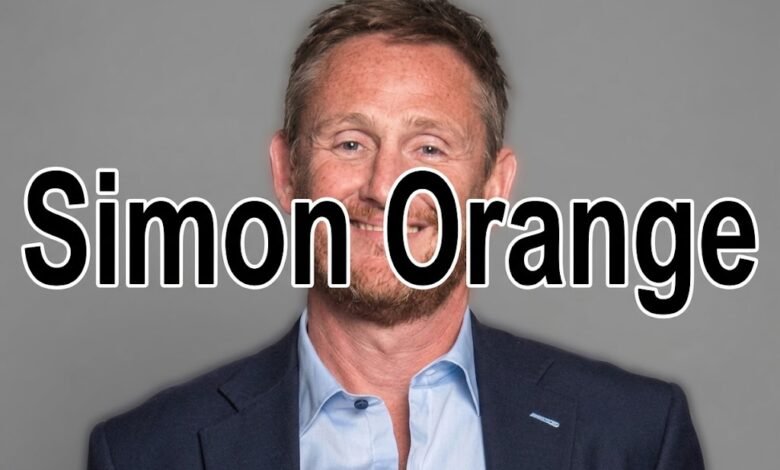
British commerce often celebrates flashy tech startups in London, but the true backbone of the economy sits in practical regional businesses. Simon Orange built his career on that exact reality. From his early days in Manchester to running an investment group worth over £1 billion, he has taken a very different path to most corporate executives. He does not strip companies down or sack staff to make a fast profit. Instead, he buys solid manufacturing and engineering firms, leaves their bosses in charge, and helps them grow over decades.
His work stretches far beyond factories and offices. As the co-owner of Sale Sharks, he pulled a historic rugby club away from financial danger and turned it into a title contender. He spends his weekends racing GT3 supercars across Europe and the Middle East at over 150 miles per hour. Yet, despite his wealth, he stays out of the celebrity spotlight, quietly building a business empire rooted firmly in the North West.
| Personal Detail | Record |
|---|---|
| Full Name | Simon Sebastian Orange |
| Date of Birth | 8 August 1967 |
| Current Age | 59 |
| Place of Birth | Manchester, England |
| Nationality | British |
| Ethnicity | White British |
| Marital Partner | Karin Michelle Orange |
| Children | None |
| School | Haveley Hey Community School |
| Major Organisations | CorpAcq, Sale Sharks, Orange Racing by JMH |
| Estimated Wealth | £1.25 billion |
Early Life and Manchester Roots of Simon Orange
Simon Sebastian Orange was born on 8 August 1967 in Manchester. He grew up in Wythenshawe, an expansive working-class district south of the city centre. His home life was loud and busy. His parents, Tony and Jenny Orange, raised six sons under one roof. Living with five brothers taught him to stand his ground, share responsibility, and solve problems quickly.
His family took quite different paths in life. His brother Jason Orange became a household name across the globe as a singer and dancer in the pop group Take That. Jason’s twin brother, Justin Orange, chose the hospitality trade and launched Toast, a well-known café in Altrincham. The other brothers—Dominic, Sam, and Oliver—also pursued their own trades.
Simon Orange went to Haveley Hey Community School in Wythenshawe. He was sharp with numbers and enjoyed practical work. He never lost his dry Mancunian sense of humour or his local accent. While music called to his brother Jason, Simon preferred business. He started out in commercial finance, asset leasing, and equipment hire across Greater Manchester. He spent his early twenties visiting small workshops, transport yards, and local factories. That early experience taught him how cash actually moves through ordinary British firms.
During this period, he met Karin Michelle Orange, known to everyone as Michelle. They met just seven days after she turned eighteen. They hit it off immediately and built their lives together from scratch. Michelle became his primary sounding board in business and later took an active ownership role in his sporting ventures. The couple decided not to have children. They made their home in the Cheshire countryside, remaining close to their family and their business headquarters in Altrincham.
How Simon Orange Built CorpAcq into an Industrial Powerhouse
The Long-Term Compounding Plan
In 2006, Simon Orange made a major career move by founding CorpAcq in Altrincham. Most private equity firms at that time followed a ruthless formula. They bought a company using heavy debt, cut the workforce, merged departments, and sold it off within four years to cash out. Simon Orange hated that model. He saw that it ruined good businesses and damaged local communities.
He set up CorpAcq on an acquisition compounding philosophy. His strategy was straightforward:
- Find successful small and medium-sized enterprises run by dedicated founders.
- Buy a controlling interest without loading the company with crippling debt.
- Keep the existing directors and workshop managers in place.
- Provide central accounting, safety oversight, and funding to help them expand.
Owners who wanted to retire or take some money off the table trusted him. They knew he would not sack their loyal workforce or shut their factory doors.
+------------------------------------------------------------------+
|                     The CorpAcq Growth Model                     |
+------------------------------------------------------------------+
| 1. Target stable UK firms earning steady cash flow.              |
| 2. Retain existing factory bosses and regional staff.            |
| 3. Add central funding, group purchasing, and legal backing.     |
| 4. Reinvest profits into buying more industrial businesses.       |
+------------------------------------------------------------------+
Expanding Across Core Industrial Sectors
Over the next fifteen years, CorpAcq quietly expanded across the United Kingdom. It avoided fashionable online trends and focused on heavy, practical industries that keep Britain functioning. The business brought more than forty operating firms into the group, generating total annual sales of more than £650 million.
Precision Engineering and Manufacturing
The group bought specialized workshops across Yorkshire, Lancashire, and the West Midlands. These companies produce complex machine components, steel parts, and mechanical assemblies used in aerospace, automotive lines, and food processing plants.
Building and Hire Operations
Another major arm of the business handles plant hire, site machinery, and architectural glass production. When building contractors need heavy excavators, temporary site power, or specialist glazing units, CorpAcq subsidiaries provide the equipment. Because the businesses share transport networks and supplier discounts, they earn healthy profits year after year.
The Billion-Pound Milestone Deal
The model received major international backing in early 2025. TDR Capital, an established European private equity firm, completed a transaction to purchase a majority stake in CorpAcq. The deal valued the Altrincham company at more than £1 billion.
Simon Orange kept a large personal shareholding and stayed on as chairman to guide future deals. In 2026, the company arranged an acquisition and debt refinancing package worth over £850 million with help from city advisers Houlihan Lokey. That financial package gave the group fresh resources to purchase more manufacturing firms across northern England and Scotland.
The Sale Sharks Transformation Under Simon Orange
The 2016 Takeover and the Northern Goal
In June 2016, Simon Orange stepped into professional sports by purchasing Sale Sharks from Brian Kennedy. Kennedy had owned the club for sixteen years, keeping it afloat financially but operating on a very tight budget. Simon Orange took a 75% majority stake alongside his wife Michelle, while his close friend Ged Mason OBE, boss of the engineering recruitment firm Morson Group, took the remaining 25%.
The new owner was brutally honest about the club’s situation. Sale had low attendances at their stadium in Salford, modest training facilities, and could not compete with the wages paid by southern clubs like Saracens or Harlequins. He laid out a bold goal: turn Sale Sharks into the undeniable rugby powerhouse of the North. He wanted children across Manchester, Liverpool, and Cumbria to dream of playing rugby union for Sale rather than switching to rugby league or football.
Rebuilding the Squad and Bringing in Alex Sanderson
Simon Orange put his own capital into the team to sign top-tier international players who could change the team’s fortunes on the pitch:
- Faf de Klerk: The electric South African scrum-half became a global star at Sale, winning the Rugby World Cup while on the club’s books.
- Lood de Jager: A giant Springbok second-row forward who gave the team genuine power in scrums and mauls.
- Manu Tuilagi: The England centre brought explosive power to the midfield and improved matchday ticket sales.
- George Ford: The England fly-half joined to control match tempo, kick crucial penalties, and guide younger backs.
In January 2021, Simon Orange appointed former Sale captain Alex Sanderson as Director of Rugby. Sanderson brought an intense, caring, and distinctly northern team culture. The players bought into his vision completely. In the 2022–23 season, Sale Sharks reached their first Premiership final at Twickenham in seventeen years, narrowly missing out on the trophy in a close match against Saracens.
         [ Simon Orange & Michelle Orange (75%) ]
                           +
              [ Ged Mason OBE (25%) ]
                           |
                           v
             [ Sale Sharks Ownership Board ]
                           |
       +-------------------+-------------------+
       |                                       |
[ Elite Rugby Operations ]            [ Commercial & Community ]
 - Alex Sanderson (Director)           - CorpAcq Stadium Naming
 - Carrington Training Ground          - Sale Sharks Foundation
 - Academy: Curry Twins, Rodd          - Women's Premiership Team
Developing the Carrington Training Ground
Professional rugby demands modern recovery and medical support. Simon Orange funded an overhaul of the high-performance training centre in Carrington. The club installed modern gym equipment, cold-water plunge pools, medical treatment rooms, analysis suites, and durable all-weather pitches. This ensured that the players had the best possible preparation for tough domestic and European fixtures.
Developing Local Talent Through the Academy
Instead of only spending money on established international stars, Simon Orange poured resources into the Sale Sharks Academy. The club recruited teenagers from across Lancashire, Cheshire, Merseyside, and Cumbria.
This investment yielded remarkable results. Brothers Tom Curry and Ben Curry came through the youth ranks to become international flankers for England and the British & Irish Lions. Prop Bevan Rodd, scrum-half Raffi Quirke, and fast-finishing winger Arron Reed all graduated from the academy into the senior international arena.
Solving the Ground Problem and the CorpAcq Stadium
For over a decade, Sale Sharks played as tenants at the Salford Community Stadium, sharing the ground with the Salford Red Devils rugby league club. Simon Orange wanted more control over matchday food, beverage, and hospitality sales. He explored building a new ground at Crossford Bridge in Sale, but local planning opposition paused that project.
He then tried to purchase the Salford stadium outright from the local council. While talks over stadium ownership continued behind closed doors, he used his business network to help the club commercially. Ahead of the 2025/26 season, CorpAcq signed a multi-year sponsorship agreement, officially rebranding the venue as the CorpAcq Stadium. This provided direct commercial revenue to help the club balance its books.
Simon Orange in Motorsport: Orange Racing by JMH
Moving from Club Events to GT3 Machinery
When he is not negotiating business acquisitions or attending rugby matches, Simon Orange races high-performance cars. He got into motorsport relatively late, starting in 2016 behind the wheel of a lightweight Mazda MX-5. That championship is famous for bumper-to-bumper racing where car setups are identical, forcing drivers to master brake control and racecraft.
He was a natural talent. By 2020, he moved up to powerful GT cars and established Orange Racing by JMH, teaming up with professional racing driver and coach Marcus Clutton. Racing in the British GT Cup, the duo secured multiple race wins and took overall championship titles.
International Endurance Races
Simon Orange graduated to a McLaren 720S GT3 Evo, a carbon-fibre racing machine producing over 700 horsepower. He took on an ambitious racing schedule across the world:
- British GT Championship: Battling professional factory drivers on challenging circuits like Brands Hatch, Silverstone, and Oulton Park.
- GT Winter Series: Racing throughout January and February on warm circuits in Portugal and Spain.
- Asian Le Mans Series: Competing in multi-class endurance races against international teams.
- Middle East 24-Hour Endurances: Running through the night in exhausting long-distance races at Dubai and Abu Dhabi.
He has started more than 115 official races, earning over 20 race wins and stepping onto the podium more than 60 times. He approaches his racing with the same calm preparation he uses in business negotiations.
Other Business Ventures and Advisory Work
Major Stake in William Hare Group
Simon Orange also holds substantial investments outside CorpAcq. He secured a significant equity position in William Hare Group, a world leader in structural steel design and engineering. The company employs over 2,000 people across nine UK plants and runs manufacturing centres in India and the United Arab Emirates. William Hare builds steel structures for airports, skyscrapers, and industrial sites, matching his interest in practical engineering.
Senior Advisory Duties with Prefequity
In 2025, Simon Orange joined London-based investment firm Prefequity as a Senior Adviser. Prefequity provides growth capital to smaller British businesses. He uses his regional network to find family-owned companies across the North of England that need capital to grow without selling out completely to London financial firms.
Property and Holding Vehicles
He manages his family assets through several holding businesses. Companies like Orange UK Holdings Limited and Sharks Holdings Limited control his core investments. Another venture, Vecapital Property Company Limited, develops commercial warehouses, business parks, and trade sites across Greater Manchester, providing reliable rental income.
Community Work, Women’s Sport, and Rugby Governance
Supporting Women’s Rugby and Local Charities
Simon and Michelle Orange expanded Sale Sharks into women’s professional sport. In 2020, they financed the creation of Sale Sharks Women, entering the top tier of English rugby in Premiership Women’s Rugby. The team gives female athletes in northern England access to professional contracts, high-performance coaching, and medical support.
Michelle Orange also works as a trustee for the Sale Sharks Foundation. The charity uses rugby to improve lives across Greater Manchester. It runs reading programmes in primary schools, delivers disability sports sessions, and helps unemployed teenagers learn practical job skills.
A Sensible Voice on Rugby Finances
With an estimated net worth of £1.25 billion, Simon Orange is one of the wealthiest club owners in English rugby. Yet, he refuses to spend money foolishly. When historic rivals like Wasps, Worcester Warriors, and London Irish went bust under millions of pounds of debt, Simon Orange was furious with the game’s authorities.
He regularly demands strict salary caps, transparent accounts, and honest administration across Premiership rugby. He believes clubs must balance their books through genuine ticket sales and commercial sponsorships rather than depending on endless benefactor handouts. His steady approach kept Sale Sharks solvent and stable while other clubs collapsed.
The Lasting Mark of Simon Orange
Simon Orange shows what can be achieved when an investor stays loyal to his roots. In corporate life, he proved that you do not need to break up solid British firms to build a billion-pound empire. In rugby, he gave northern supporters a team capable of fighting for national trophies. Through manufacturing investments, youth sports academies, and motorsport, his career proves that patience, common sense, and hard work deliver lasting success.
FAQs
Who is Simon Orange?
Simon Orange is a British entrepreneur, private equity investor, and sports executive. He is the founder and chairman of the Altrincham-based investment group CorpAcq, co-owner of Gallagher Premiership rugby union club Sale Sharks, and an endurance GT racing driver for Orange Racing by JMH.
How old is Simon Orange?
He is 59 years old, born in August 1967 in Manchester, England.
Who are Simon Orange’s parents?
His parents are Tony and Jenny Orange, who raised him alongside his brothers in Wythenshawe, South Manchester.
Is Simon Orange married?
Yes, he is married to Karin Michelle Orange (known as Michelle Orange). She is his long-time business partner, co-owner of Sale Sharks, and an active trustee of the Sale Sharks Foundation.
Who are Simon Orange’s siblings?
He is one of six brothers. His most notable siblings are Jason Orange (former singer and dancer in the British pop band Take That) and Jason’s twin brother Justin Orange (a Manchester restaurateur), alongside brothers Dominic, Sam, and Oliver.