Hiroki Takeuchi: The Fintech Visionary Who Changed Bank Payments and Rebuilt His Life

Who Is Hiroki Takeuchi?
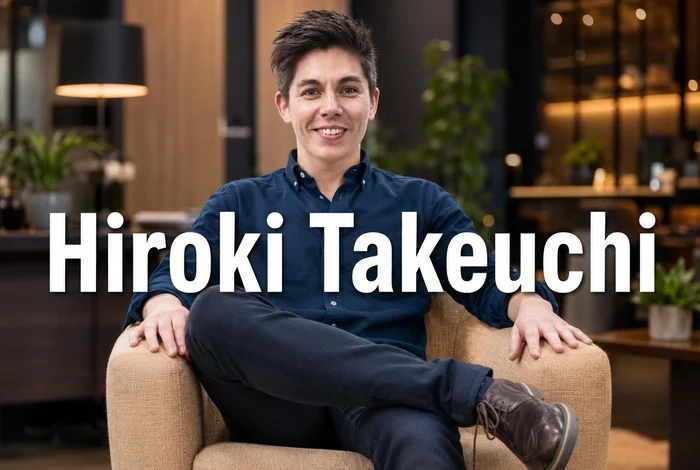
Hiroki Takeuchi is a British entrepreneur, co-founder and chief executive of GoCardless, and a leading fintech figure. He helped turn a London start-up into an international bank-payment company used by 100,000 businesses.
His career carries two stories. The first is the rise of GoCardless, which challenged card-based systems by making bank payments easier for companies and customers. The second is his return to leadership after a cycling crash in 2016 left him paralysed below the chest.
His full name is Hiroki James Takeuchi. He was born in May 1986 and turned 40 in 2026. Companies House records identify him as British and resident in the United Kingdom.
Hiroki Takeuchi’s Education and Early Ambition
Mathematics at the University of Oxford
Takeuchi studied at the University of Oxford from 2004 to 2008 and completed an MMath degree in Mathematics.
He also served as vice-president of Oxford Entrepreneurs, a student society that encouraged young founders. He helped establish Varsity Pitch, a business contest involving Oxford and Cambridge students. The event offered a £10,000 prize. He also led Idea Idol, another student business competition.
These activities helped him view entrepreneurship as a serious career.
Internships Before Graduation
While still a student, Takeuchi worked with Boso, a student marketplace venture, and prepared financial forecasts. He later joined JPMorgan Cazenove as a summer analyst in Equity Capital Markets. In 2007, he worked at Auctomatic, a technology start-up. These roles introduced him to investment, commerce, and start-up life.
From McKinsey to Entrepreneurship
After Oxford, Hiroki Takeuchi joined McKinsey & Company as a business analyst in October 2008 and remained there until August 2010.
His work involved solving problems, managing project work, carrying out analysis, and working with senior executives. He stated that he ranked within the top 20 per cent of his group.
McKinsey sharpened his commercial judgement, but consulting did not fully satisfy his desire to build something of his own. It was also where he met Matt Robinson. Their early conversations often focused on business ideas and launching a company together.
Takeuchi left McKinsey in 2010 and briefly operated Takeuchi Consulting Limited before committing himself to a larger venture.
How Hiroki Takeuchi Built GoCardless
Founding the Company in 2011
GoCardless was founded in January 2011 by Hiroki Takeuchi, Matt Robinson, and Tom Blomfield. The team wanted to make bank payments easier, especially for businesses collecting subscriptions, invoices, memberships, and regular fees.
Card systems could be costly and poorly suited to recurring payments. The founders believed companies needed a simpler way to collect money directly from customer bank accounts.
GoCardless joined Y Combinator’s Summer 2011 programme in the United States. It gained early investment, expert guidance, and access to a strong technology network.
Early Growth Through Partnerships
The company began with limited resources, with some early work completed in Takeuchi’s bedroom. A breakthrough came through KashFlow, an accounting software business.
KashFlow became an early customer and partner. The relationship showed that integrations with accounting systems and other platforms could help GoCardless reach many companies without depending only on direct sales. Partnerships later became central to its international growth.
Becoming Chief Executive
Takeuchi has served as a founder since January 2011 and as chief executive since December 2013. Tom Blomfield left in 2013, while Matt Robinson later stepped away from daily leadership.
As the main executive, Takeuchi guided fundraising, overseas expansion, product development, acquisitions, and changes in senior management.
He has spoken honestly about early mistakes. The founders sometimes tried to create every process and management method themselves. He later learnt that experienced leaders could help the company avoid preventable errors and grow with greater discipline.
What GoCardless Does
GoCardless helps businesses collect and send money through bank accounts. Its services include Direct Debit, one-off bank payments, open-banking payments, account verification, fraud protection, payment recovery, and business payouts.
The company serves more than 100,000 customers, connects with over 2,500 banks, operates across more than 30 countries, and processes more than $130 billion each year.
Its purpose is to reduce the stress and cost of getting paid. Businesses can automate collections, reduce failed payments, connect transactions with accounting systems, and improve cash flow.
Funding and Company Value
GoCardless attracted investment from Y Combinator, Accel, Balderton Capital, GV, Notion Capital, Passion Capital, Salesforce Ventures, Permira, and BlackRock Private Equity Partners.
In February 2022, it raised $312 million in Series G funding. The investment valued the company at about $2.1 billion and supported its open-banking and international plans.
Acquisitions Led by Hiroki Takeuchi
In 2022, GoCardless acquired Nordigen, a Latvian open-banking platform that provided access to bank-account data across Europe.
In 2024, it completed the acquisition of Sentenial, trading as Nuapay. The deal strengthened its partner network and added services that allowed businesses to send money as well as collect it.
GoCardless also migrated 5.5 million Octopus Energy accounts and handled £12 billion in payments. Its Success+ system helped recover £48 million in failed payments. Another milestone came when the company processed £1 billion in bank payments in one day.
Mollie’s Agreement to Acquire GoCardless
In December 2025, Dutch payments company Mollie agreed to acquire GoCardless in a deal valued at €1.05 billion.
The plan combines Mollie’s card and local payment methods with GoCardless technology for Direct Debit and open banking. Together, the businesses would serve more than 350,000 customers.
Takeuchi described the agreement as a chance to create a stronger European payments company, not a personal exit. Most of the value was structured through shares, allowing key GoCardless owners to retain an interest in the combined group.
The transaction remained subject to regulatory approval and standard closing conditions, with completion expected in mid-2026. No formal completion announcement had been issued by 17 July 2026.
Hiroki Takeuchi’s Life-Changing Accident
The Regent’s Park Cycling Crash
On 22 September 2016, Hiroki Takeuchi was cycling with his brother near Regent’s Park in London before work. After losing concentration for a moment, he collided with a car.
The crash caused a severe spinal injury and a deep neck wound. He was taken to St Mary’s Hospital in Paddington and underwent an operation lasting about eight hours.
The surgery stabilised his spine but could not restore movement below his chest. He became paralysed and began using a manual wheelchair. The accident happened only weeks after his marriage to Rachel Swidenbank.
Returning to Work After Paralysis
Takeuchi’s commitment to GoCardless remained strong during recovery. One of his earliest concerns after surgery was speaking with Matt Robinson about the company.
He returned to work about three months after the crash, starting with two days each week. His role did not require physical movement, so the office gave him a place where his skills and authority remained unchanged.
He and Rachel later spoke with honesty about altered family roles, dependence, accessibility problems, and the emotional weight of permanent disability. He did not present his return as a miracle cure. Instead, he showed that leadership and purpose could continue alongside major physical limits.
Wife, Children, and Disability Advocacy
Hiroki Takeuchi is married to Rachel Swidenbank. They have three children, and fatherhood has deepened his interest in independence, confidence, and support for disabled young people.
The family created a wheelchair-accessible home suited to daily life and parenting. The project reflected the practical changes required after his accident while protecting comfort and family connection.
Takeuchi volunteers with Whizz Kidz, a British charity supporting young wheelchair users. He believes disability should not prevent success when people receive suitable equipment, access, education, and encouragement.
He has also contributed to discussion about disabled leadership in British business. His career challenges the false idea that disability and senior leadership cannot exist together.
Leadership Style and Business Beliefs
Patience, Humility, and Strong Teams
Takeuchi believes building a successful company requires patience. Venture-backed businesses may demand many years of focused work, so founders must understand the commitment.
He values humility, learning, and experienced teams. Mistakes matter less when leaders correct course and improve future decisions.
Open Banking as a Generational Opportunity
Takeuchi sees open banking as a major change in how people pay and get paid. Instead of depending on card networks for every transaction, businesses can move money safely between bank accounts.
His vision expanded from recurring Direct Debit collections to one-off payments, account data, fraud control, instant payments, and Variable Recurring Payments. He believes direct bank payments can reduce costs, improve security, and give companies greater control over cash flow.
Hiroki Takeuchi’s Net Worth
An Evening Standard wealth estimate placed his fortune at £31.2 million in 2023. This was a media calculation rather than an audited personal figure.
His present wealth cannot be confirmed because his exact ownership share in GoCardless has not been disclosed. The Mollie agreement may change the value of his holdings, especially because most of the payment was planned in shares.
The £31.2 million figure should therefore be treated as an older estimate, not a confirmed current total.
The Lasting Impact of Hiroki Takeuchi
Hiroki Takeuchi helped reshape business payments by turning a small idea into a global fintech operation. His Oxford education, McKinsey training, Y Combinator experience, and disciplined leadership all contributed to GoCardless.
His personal journey adds deeper meaning to his success. After a devastating injury, he returned to the company, raised a family, supported disabled young people, and continued leading at international level.
His work shows that strong leadership is not based on physical ability. It rests on judgement, courage, patience, and the power to build a team behind a clear purpose.
FAQs
1. Who is Hiroki Takeuchi?
Hiroki Takeuchi is a British fintech entrepreneur and the co-founder and CEO of GoCardless. He helped build the company into a global bank-payment platform serving more than 100,000 businesses.
2. What happened in Hiroki Takeuchi’s accident?
In September 2016, he suffered a serious cycling accident near Regent’s Park in London. The crash caused a spinal injury that left him paralysed below the chest. He returned to work about three months later.
3. What is Hiroki Takeuchi’s educational background?
He studied Mathematics at the University of Oxford and completed an MMath degree in 2008. While at Oxford, he also served as vice-president of Oxford Entrepreneurs.
4. Who is Hiroki Takeuchi’s wife?
He is married to Rachel Swidenbank. The couple have spoken about his recovery after the accident and the changes it brought to their family life. They have three children.
5. What is Hiroki Takeuchi’s net worth?
His exact net worth has not been officially confirmed. A media estimate placed his wealth at £31.2 million in 2023, but his current fortune may differ because his ownership stake in GoCardless remains private.