Sarah Lewthwaite: The Scholar Transforming Digital Accessibility Education

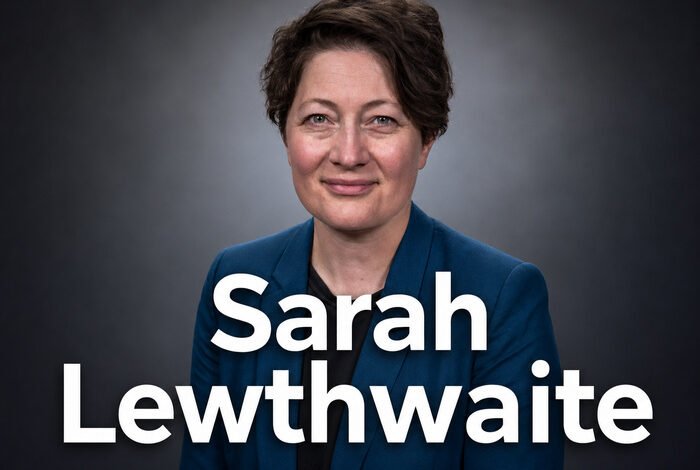
Dr Sarah Lewthwaite is an education and disability studies researcher whose work has changed how universities, employers and technology teams approach digital accessibility. She is a Principal Research Fellow at Southampton Education School and Co-Director of the Centre for Research in Inclusion. Her career connects higher education, critical disability studies, social media, human-computer interaction and workplace learning.
Her central message is clear: accessible technology requires skilled people, strong teaching, supportive organisations and the direct involvement of disabled people. Her research, teaching and policy work examine how accessibility knowledge is developed and shared.
Who Is Sarah Lewthwaite?
Sarah Lewthwaite holds BA(Hons), MA and PhD qualifications and is a Fellow of the Royal Society of Arts, shown by the postnominal FRSA. At the University of Southampton, she combines research leadership with teaching, supervision and collaboration across academic and professional communities.
Her interests include higher education, critical disability studies, digital accessibility, social media, inclusive research methods and advanced methods teaching. She is also connected with the Work Futures Research Centre, linking her work with skills, careers and changing workplaces.
She should not be confused with the Sarah Lewthwaite who works as a BBC journalist and University of West London lecturer.
Sarah Lewthwaite’s Education and Academic Development
Dr Lewthwaite completed an MA in Research Methods with Distinction and later earned her PhD through the Learning Sciences Research Institute at the University of Nottingham. Her doctoral research examined disabled students’ experiences of social networks in higher education.
Doctoral Research on Disability and Social Networks
Her PhD explored how online networks shaped the lives and identities of disabled students. She examined whether digital spaces reduced barriers or created new exclusion, joining disability studies with debates about Web 2.0, online communities and student life.
The project also reflected her interest in accessible digital research methods. Rather than treating access as an extra step, she considered it part of good research design. This principle later became central to her wider work on accessibility education.
Early Professional Experience
Before her main academic appointments, Dr Lewthwaite supported disabled people’s access to education and technology across secondary education, higher education and the public sector. This experience gave her direct knowledge of institutional and digital barriers.
After her doctorate, she contributed to the European Commission-supported MyUI project, which developed interactive digital designs for older users. She then worked as a postdoctoral research associate at King’s College London, focusing on the student experience.
Career at the University of Southampton
Dr Lewthwaite joined Southampton Education School through work connected with the National Centre for Research Methods. Her research examined the teaching and learning of advanced social science methods, with particular attention to difficult concepts, learner experience and effective pedagogy.
She later progressed to Principal Research Fellow and became Co-Director of the Centre for Research in Inclusion. In this role, she supports research on disability, participation and inclusive education.
National Centre for Research Methods
At the National Centre for Research Methods, she worked on the pedagogy of methodological learning. This field studies how research methods are taught, how students develop confidence, and how educators explain complex ideas.
Her work has addressed advanced qualitative methods, large-scale qualitative analysis, methods textbooks, active learning and the development of methods teachers.
Teaching and Supervision
Her teaching includes advanced qualitative research methods and master’s-level education topics linked with digital innovation. She also supports doctoral research and welcomes projects connected with accessibility, disability studies, higher education and inclusive digital practice.
She studies the way expert knowledge is learned, practised and passed from one generation of professionals to the next.
Sarah Lewthwaite and Digital Accessibility
Digital accessibility concerns designing websites, apps, documents, platforms and services that disabled people can use effectively. Dr Lewthwaite studies both accessible products and the people who learn to create them.
She asks how developers, designers, lecturers, managers, trainers and content authors gain accessibility skills. She also examines why many organisations still treat accessibility as a specialist task instead of a shared responsibility.
Teaching Accessibility in the Digital Skill Set
Her major research programme is Teaching Accessibility in the Digital Skill Set. She leads the work as Principal Investigator through a UK Research and Innovation Future Leaders Fellowship.
The fellowship runs from 2019 to 2028 and is valued at about £1.6 million. Its first phase examined teaching in higher education and workplaces, while the later phase covers career-long learning, professional communities and artificial intelligence.
The programme studies formal university courses, workplace training, professional development and informal learning. It also brings together accessibility educators from universities, businesses and specialist communities.
Main Goals of the Programme
The study aims to identify effective teaching methods, strengthen accessibility education and help organisations build lasting skills. It also seeks to improve cooperation between academic and industry educators.
A key purpose is to move accessibility away from a narrow compliance mindset. Instead of teaching people only to follow standards, the work encourages them to understand disability, exclusion, user experience and professional responsibility.
Accessibility as a Shared Responsibility
One of the strongest findings from her research is that accessibility should not sit with one specialist. Developers, designers, teachers, managers, buyers and content teams all influence whether a service is inclusive.
A major study involving 55 accessibility educators showed the need for a common foundation of awareness across different roles. Staff need basic knowledge, while specialist workers require deeper technical and professional development.
Her work also shows that training is insufficient when leadership, budgets, deadlines or workplace systems discourage accessible design. Organisational culture is essential.
Critical Disability Studies and Inclusive Design
Dr Lewthwaite’s work is shaped by critical disability studies. This approach focuses on the barriers created by society, technology and institutions rather than viewing disability only as an individual medical issue.
She examines who is included in design decisions, whose needs are ignored, and who carries the burden of fixing inaccessible systems. Her work encourages designers and developers to engage with disability theory and the lived experience of disabled people.
Social Media, Web Culture and Disability
Her earlier scholarship considered how social media changed the boundary between disabled and non-disabled identities. Online spaces could offer connection, support and new forms of participation, but they could also repeat social prejudice and inaccessible design.
Her academic blog documented disability studies, doctoral research, methods and web accessibility. Its accessible WordPress theme, audio options, RSS and email subscriptions showed that she applied these principles to her own communication.
Artificial Intelligence and Future Skills
Artificial intelligence is now important to her work. AI can support captions, image description and personalised access, yet it may reproduce bias when disabled people are absent from data and design teams.
Her research calls for critical thinking about who benefits from AI and who may be excluded. It also stresses the need to involve disabled people in the design, testing and governance of new systems.
In 2026, she delivered the University of Oxford Annual Disability Lecture, Digital Accessibility at the Crossroads: Infrastructure, AI, and the Future We Build. The lecture examined accessibility as part of digital infrastructure rather than an optional feature.
Her recent work also considers the skills needed by future accessibility professionals and the way AI may change accessibility roles, teaching and professional standards.
New Approaches to Digital Skills Development
Dr Lewthwaite is a Co-Investigator on New Approaches to Digital Skills Development, an ESRC investment based at the National Centre for Research Methods. The project develops training in new research technologies, including large language models, AI-based prediction and environmentally focused digital methods.
Her contribution connects advanced digital skills with sound pedagogy and inclusion. She helps ensure that new training is not only technically strong but also teachable, usable and accessible.
Publications, Policy Work and Professional Influence
Dr Lewthwaite has produced more than 60 academic outputs, including journal articles, reports, book chapters, teaching resources, conference papers and policy responses. Her work covers digital accessibility education, methods pedagogy, disability rights, social media, assistive technology and inclusive policy.
She has contributed to international accessibility education through work connected with the World Wide Web Consortium’s Web Accessibility Initiative. Her expertise has supported curriculum resources for content authors, designers and other digital professionals.
She has also worked with or influenced communities connected with Teach Access, Jisc, the Institute of Coding, the International Association of Accessibility Professionals and accessibility teams in higher education and industry.
Wider Impact
Her impact connects research with practice. Universities can improve courses, employers can build staff capability, policymakers can shape digital inclusion plans, and accessibility professionals can strengthen career development.
Personal Life and Public Boundaries
Dr Lewthwaite keeps her public work focused on research, teaching and professional activity. Her date of birth, exact age, marital status, family life, salary and net worth are not confirmed through dependable academic sources.
Claims connecting her with BBC correspondent Gary O’Donoghue belong to the other Sarah Lewthwaite, the journalist and University of West London lecturer. Keeping these identities separate is essential for an accurate biography.
Why Sarah Lewthwaite’s Work Matters
Dr Sarah Lewthwaite has helped establish digital accessibility as a serious educational and organisational field. Her work shows that standards are useful, but people must understand why accessibility matters and how exclusion is created.
Her research brings together disability rights, technology, teaching and workplace culture. It argues that accessible digital life depends on more than specialist knowledge. It depends on shared responsibility, strong leadership, skilled educators and meaningful participation by disabled people.
Through her fellowship, academic leadership, teaching and policy engagement, she continues to shape how accessibility is learned and practised. Her career offers a powerful example of research that improves both knowledge and everyday digital life.
FAQs
1. Who is Sarah Lewthwaite?
Dr Sarah Lewthwaite is a Principal Research Fellow at Southampton Education School and Co-Director of the Centre for Research in Inclusion. Her work focuses on digital accessibility, critical disability studies and higher education. She also leads the UKRI-funded Teaching Accessibility in the Digital Skill Set programme.
2. How old is Sarah Lewthwaite?
Her exact age and date of birth have not been disclosed through her official academic pages. Therefore, any age given without firm evidence would be inaccurate.
3. Who are Sarah Lewthwaite’s parents?
The names and occupations of her parents have not been shared through dependable academic or institutional sources. Her professional biography concentrates on her education, research and university career.
4. Is Sarah Lewthwaite married?
Dr Sarah Lewthwaite has not confirmed her marital status through her recognised academic pages. She must not be confused with the BBC journalist of the same name, who has been connected with broadcaster Gary O’Donoghue.
5. Does Sarah Lewthwaite have any siblings?
No verified details about her brothers or sisters are available. She keeps her family life private and maintains a professional presence centred on digital accessibility, education and disability research.